NeighborWorks America
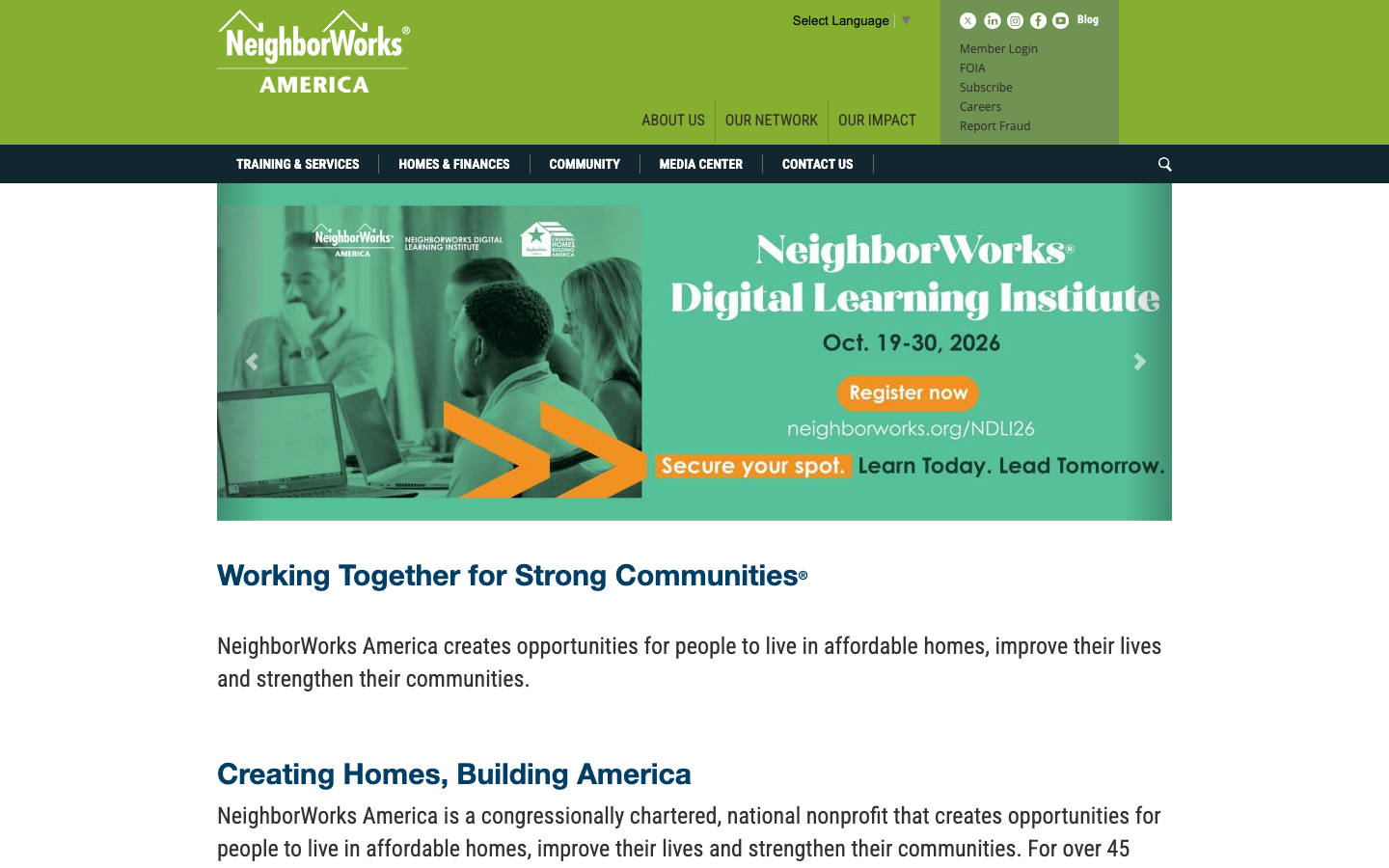
Promo carousel for a training institute with Register now.
Across 114 peers, interaction is rare and specific: carousels, a Lottie, video, find-and-apply doors, language, donate, consent bars, maps, FAQ. Attention is tuned by a named next step more often than by motion.
4 shown
A slideshow in the hero or a campaign strip steals the first look. The better ones name a next step on the slide — Register, Donate, How to apply — instead of only paging photographs.
Steal. If FNPH uses a carousel, every slide must have one verb. Autoplay is optional; pause is not.
Refuse. Do not autoplay five mission photos with no action.
Promo carousel for a training institute with Register now.
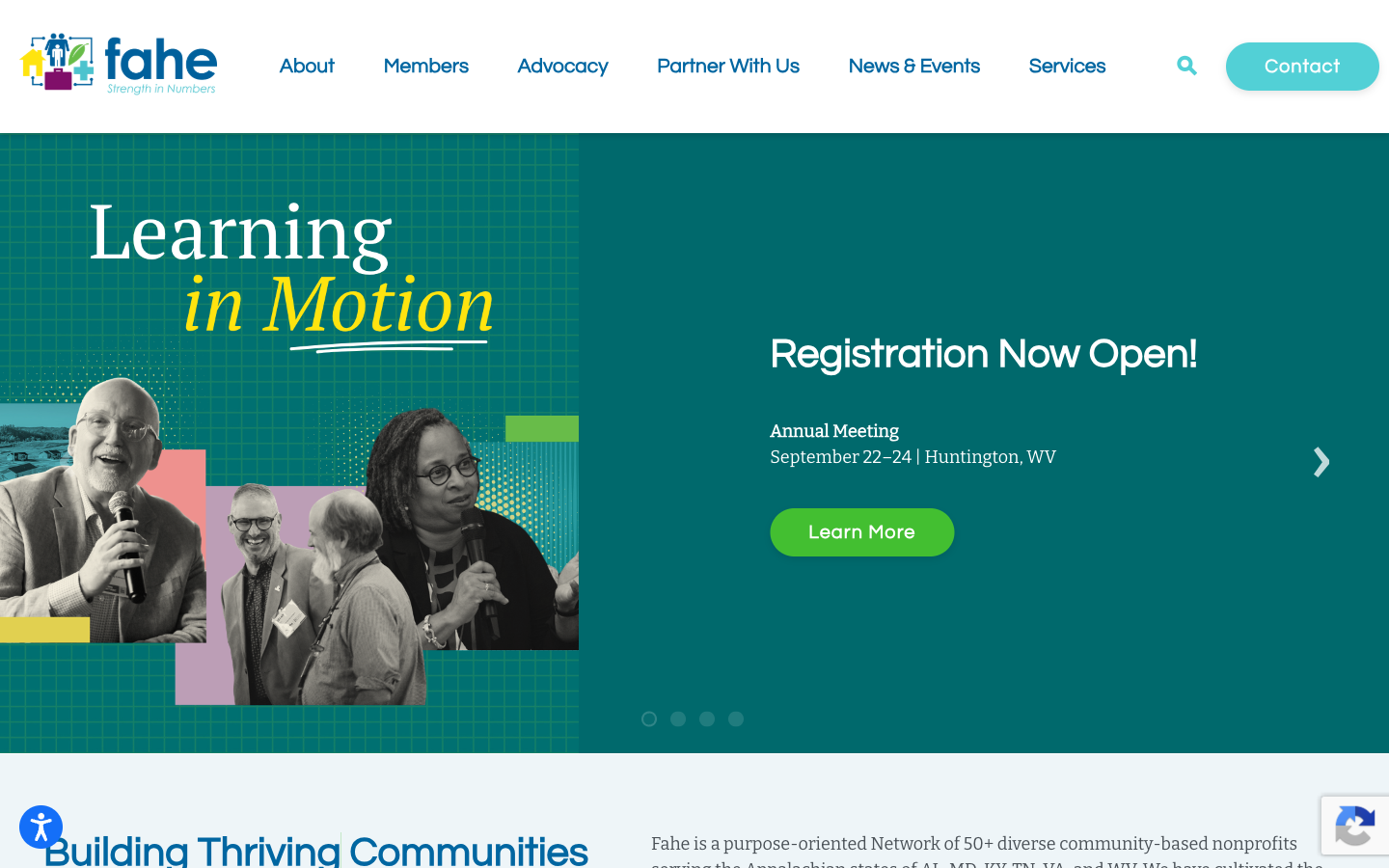
Campaign carousel: annual meeting, Housing Can't Wait, disaster notes.
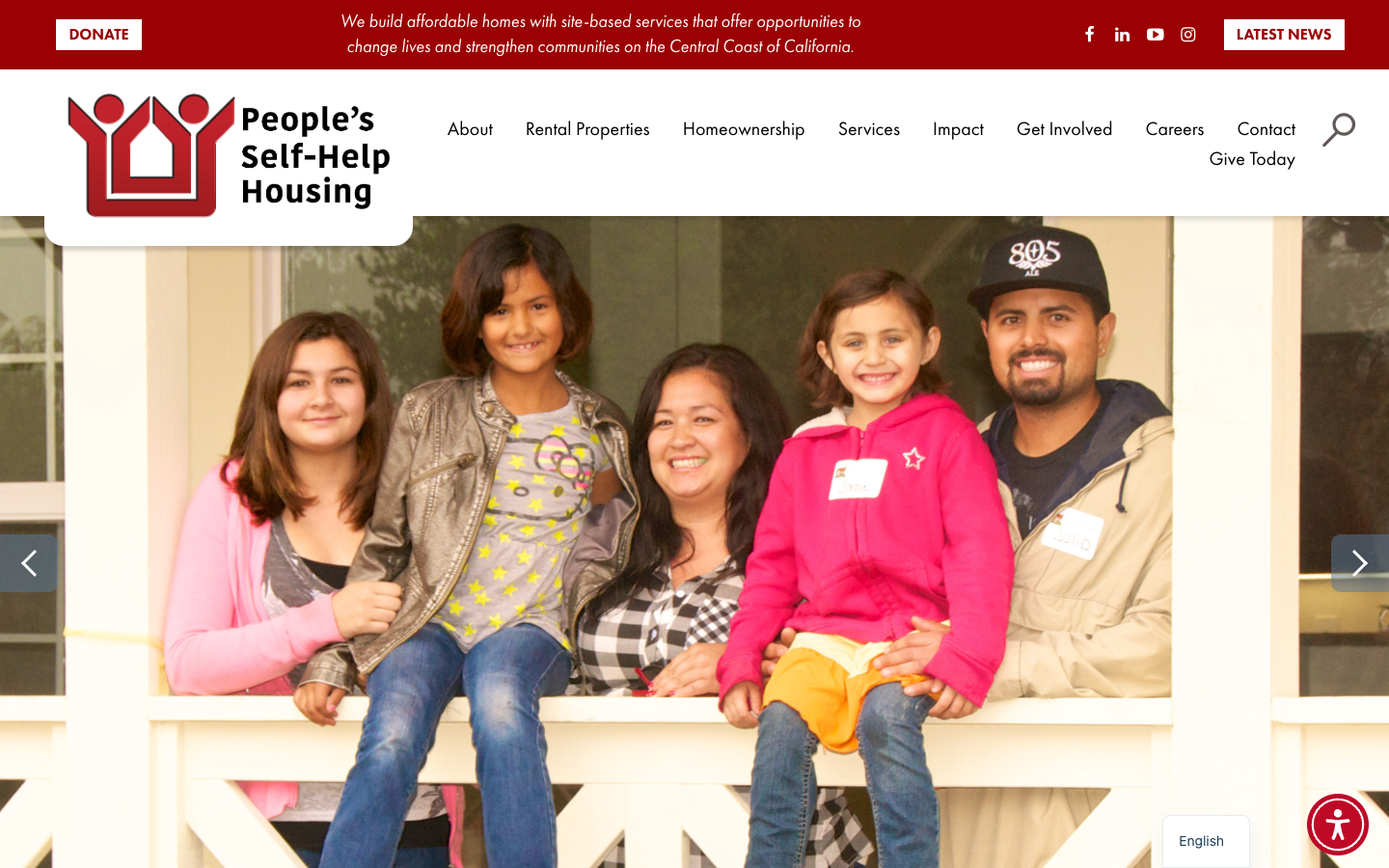
Family-on-the-porch slides with previous/next chevrons.
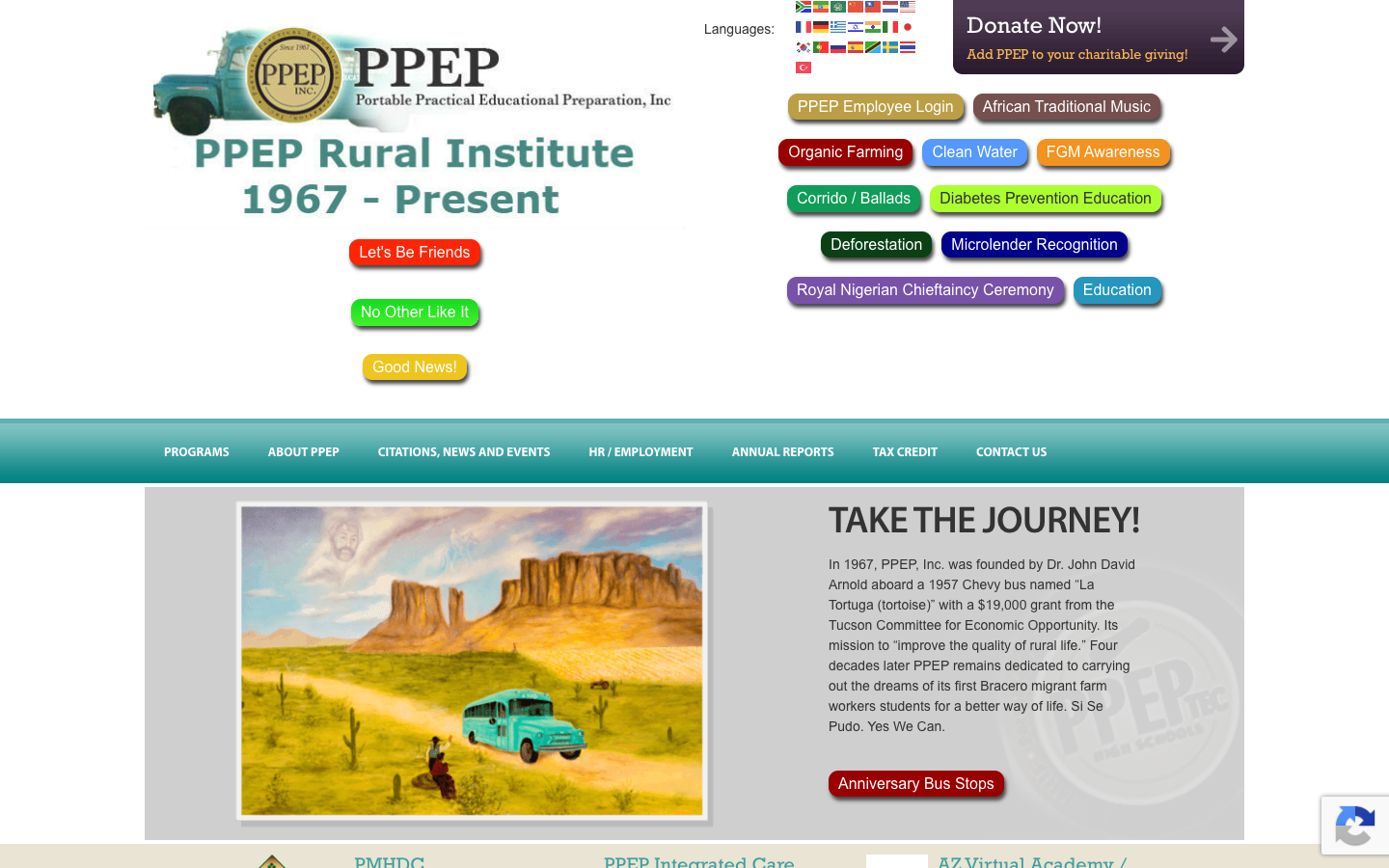
Harvested homepage carousel among the 114.
3 shown
Almost none of the 114 animate. True Ground is the exception: a Lottie collage in the hero. Self-Help Enterprises and Self-Help Homes put a play-video control on the homepage.
Steal. One authored motion, already visible at rest. Prefer a short film of a real house over a looping decoration.
Refuse. Do not sprinkle hover fades on every card to look interactive.
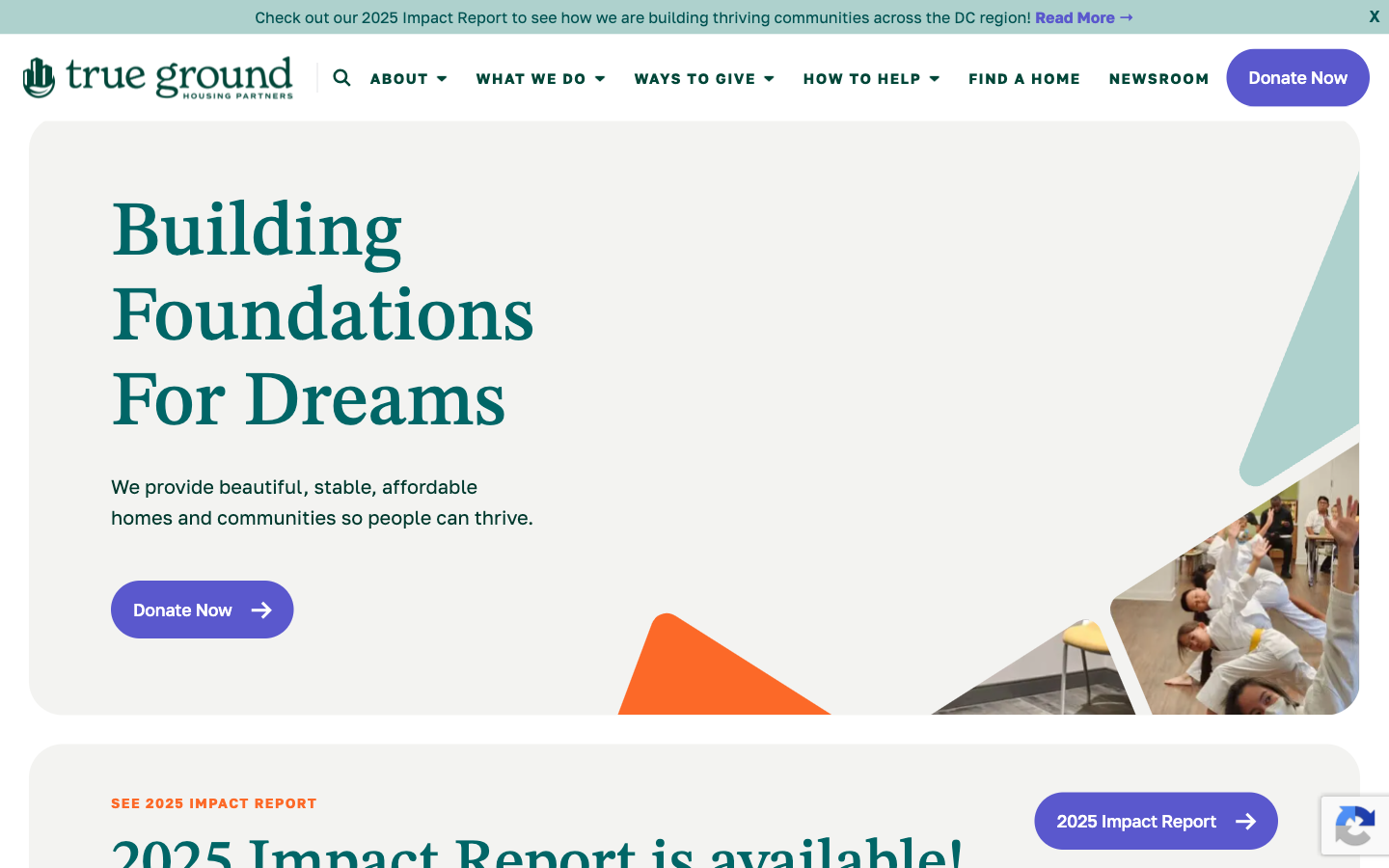
Lottie shards and a photograph collage in the first field.

Play video on Mutual Self-Help Housing.
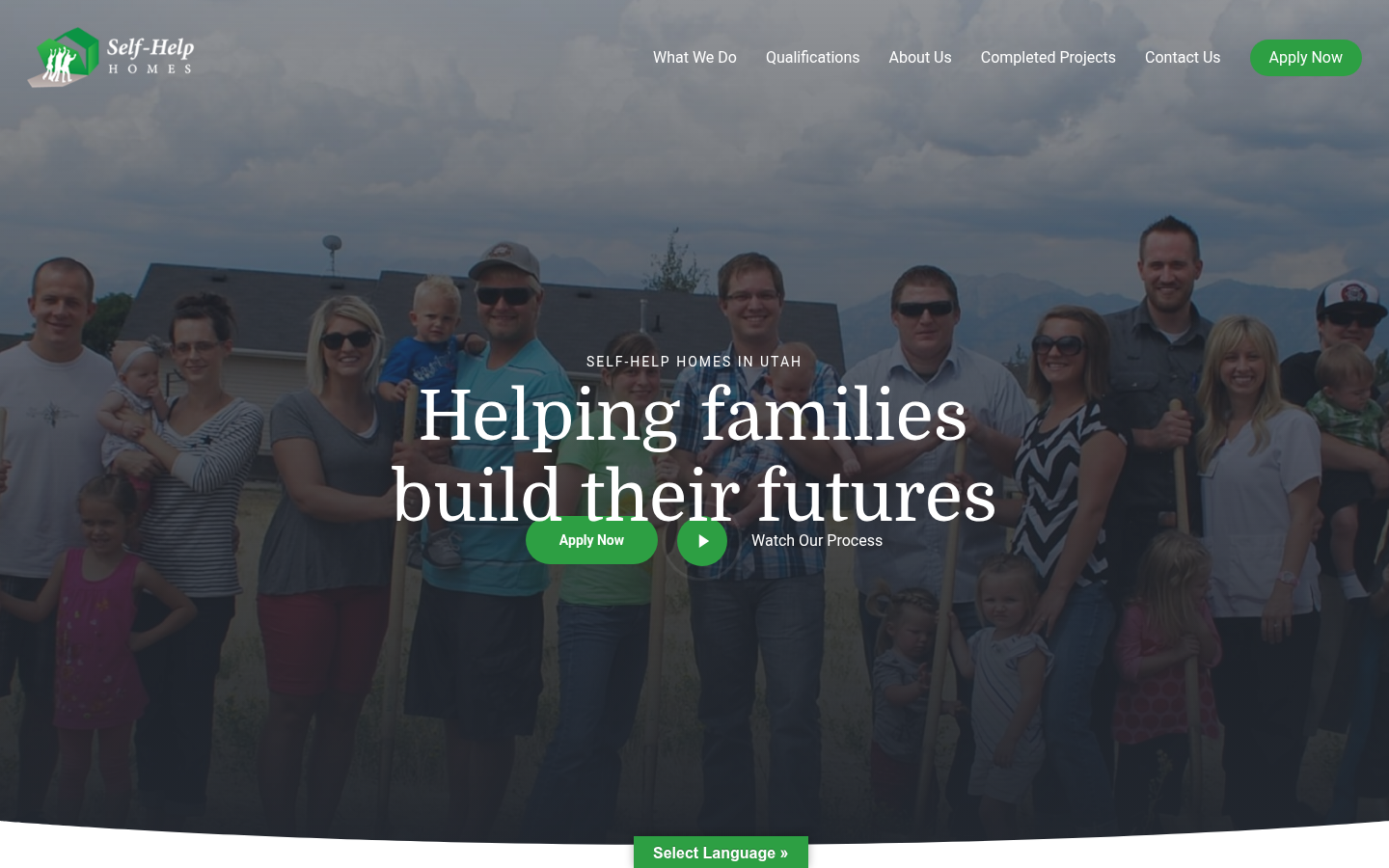
Homepage video among the later 523 operators.
6 shown
Attention is tuned by a named door, not by animation: Find a home, How to apply, Looking for housing?, Get assistance. Search in the chrome is quiet; the named door is loud.
Steal. Put Find housing or Start counseling on a button that says the job.
Refuse. Do not hide apply behind a hamburger labelled Resources.

How to Apply, Search for Housing, Featured Vacancies, Housing Referral.
Find a Home as a repeated resident door.
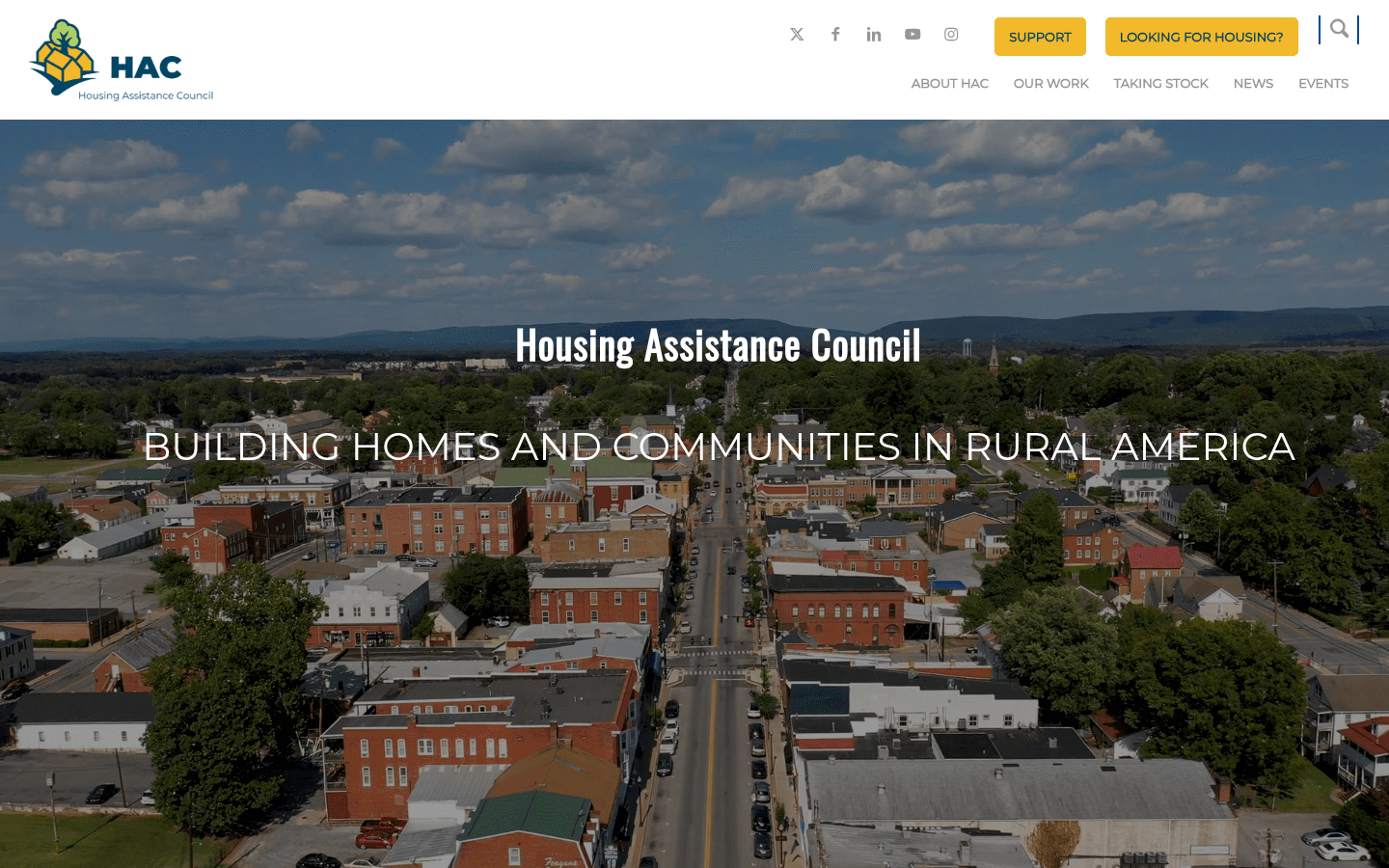
Looking for housing? as a yellow bar button.
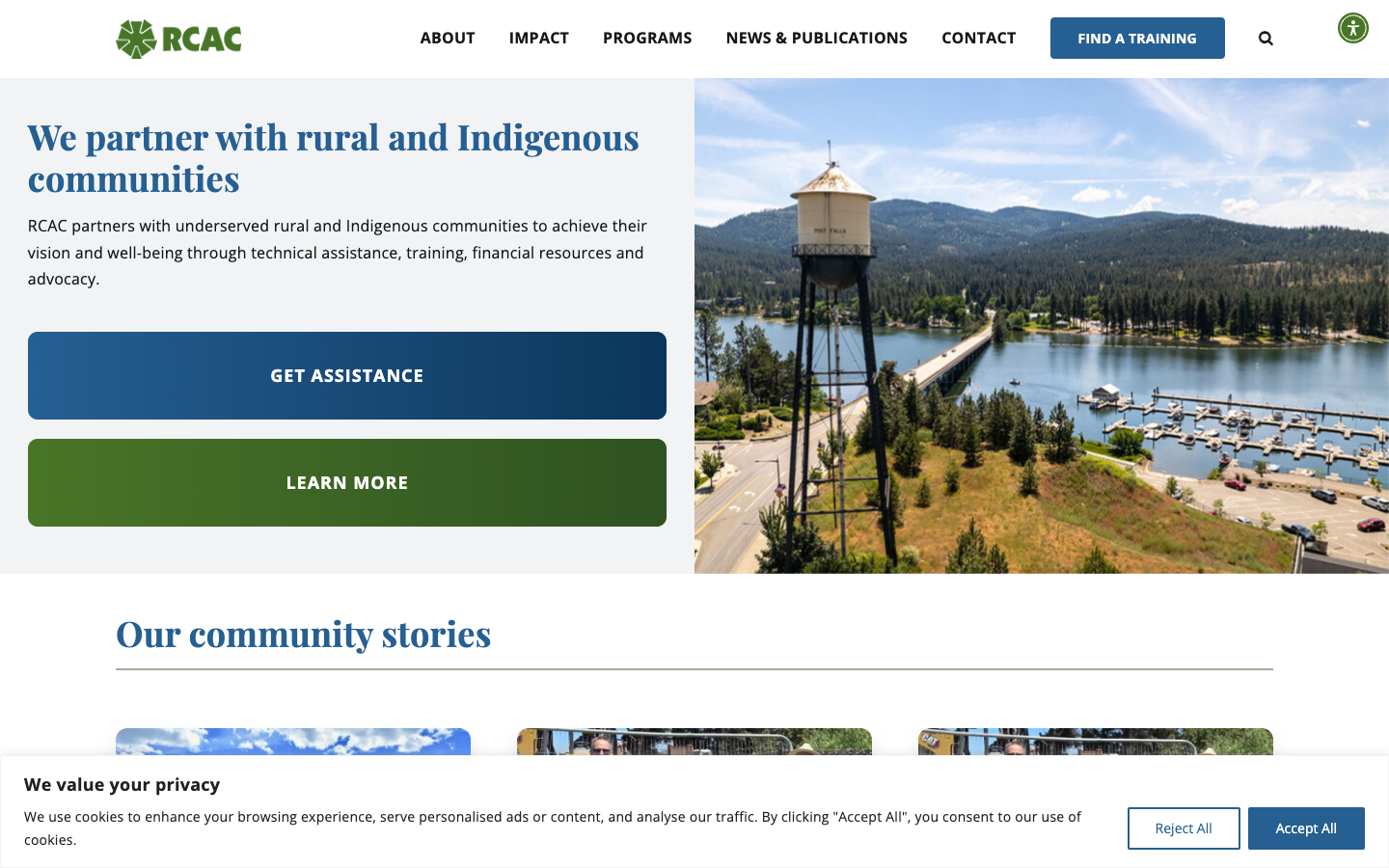
Get assistance and Find a training as the two primary actions.
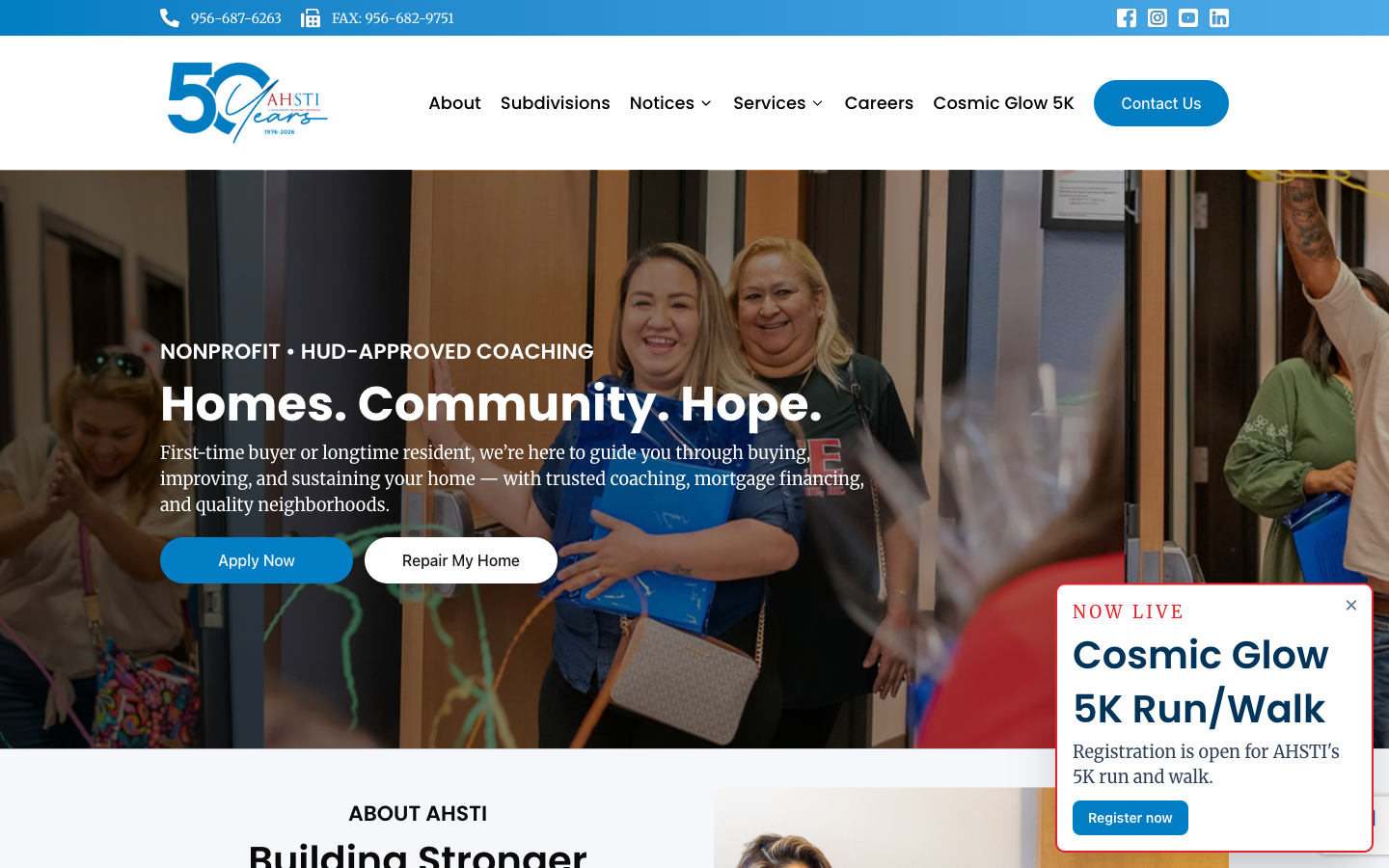
Apply-now language on a South Texas operator.
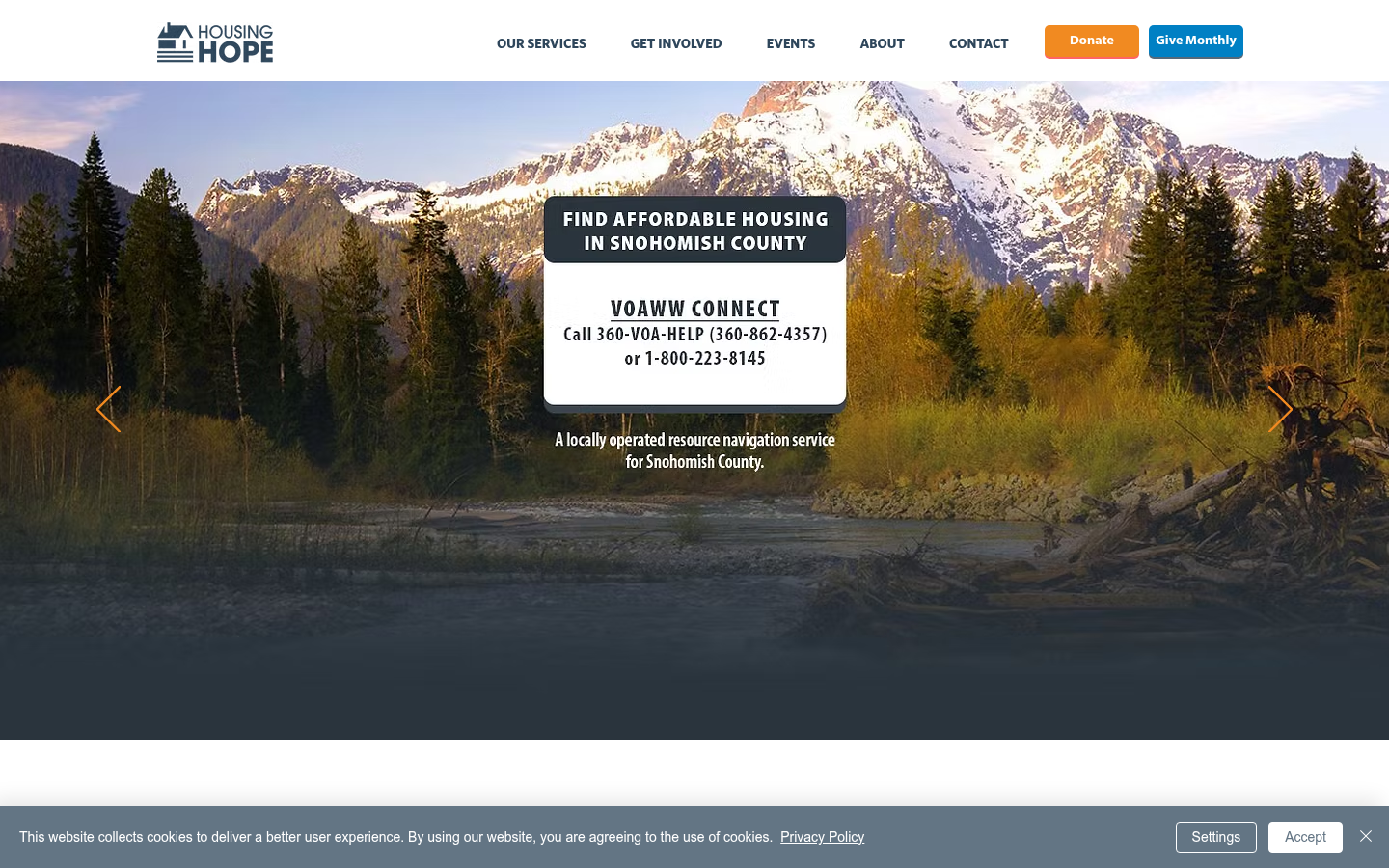
Apply now among the later queue.
6 shown
A handful of the 114 expose English / Español or a translate widget in the chrome. NeighborWorks, CPLC, and People's Self-Help Housing do it in the first screen.
Steal. Language in the utility row, beside Give. FNPH already owes English and Español.
Refuse. Do not bury language inside a footer column of 40 links.
Select language in the lime utility field.
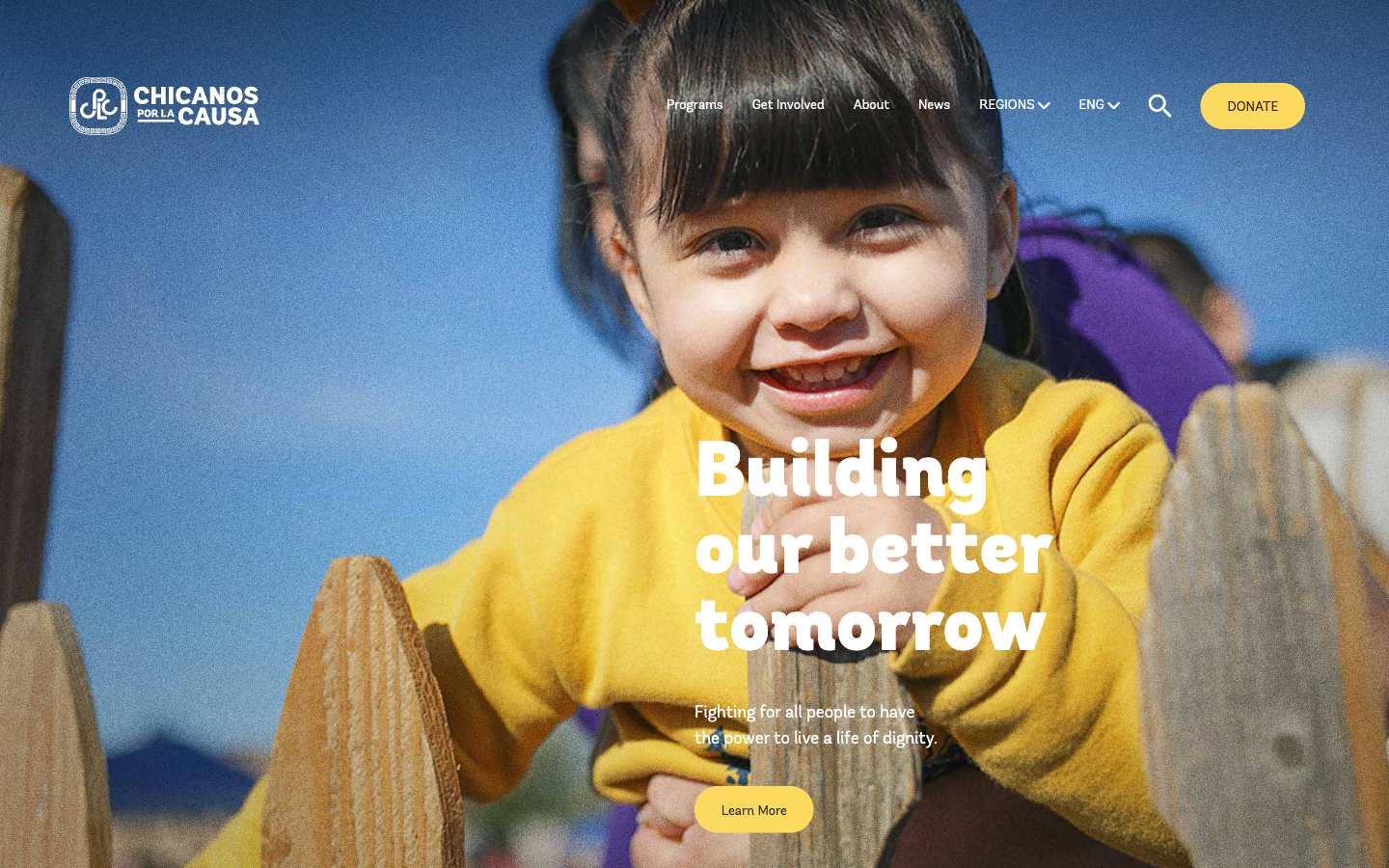
ENG dropdown beside Donate.
English control on the photograph.
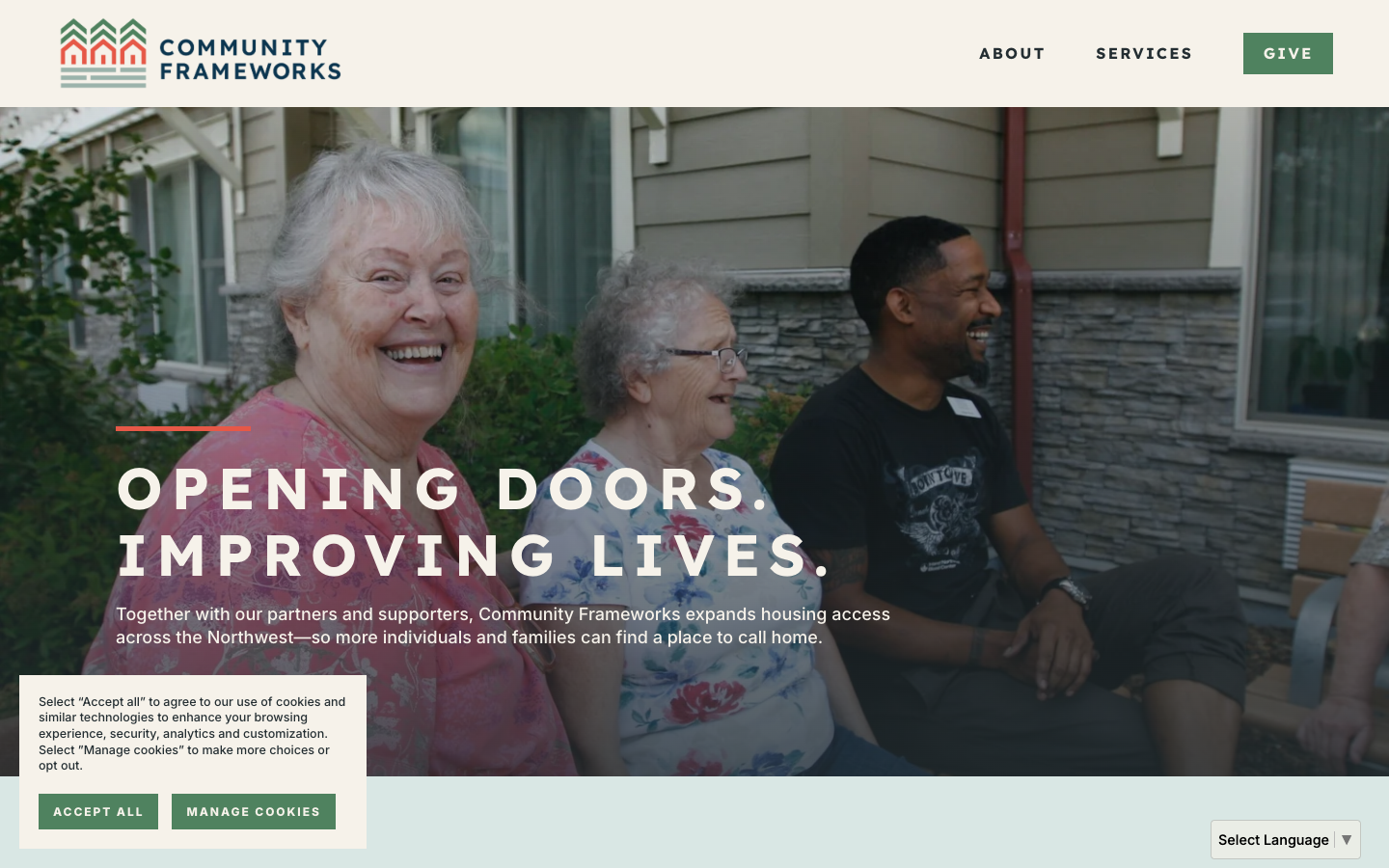
Translate tooling in the harvest.
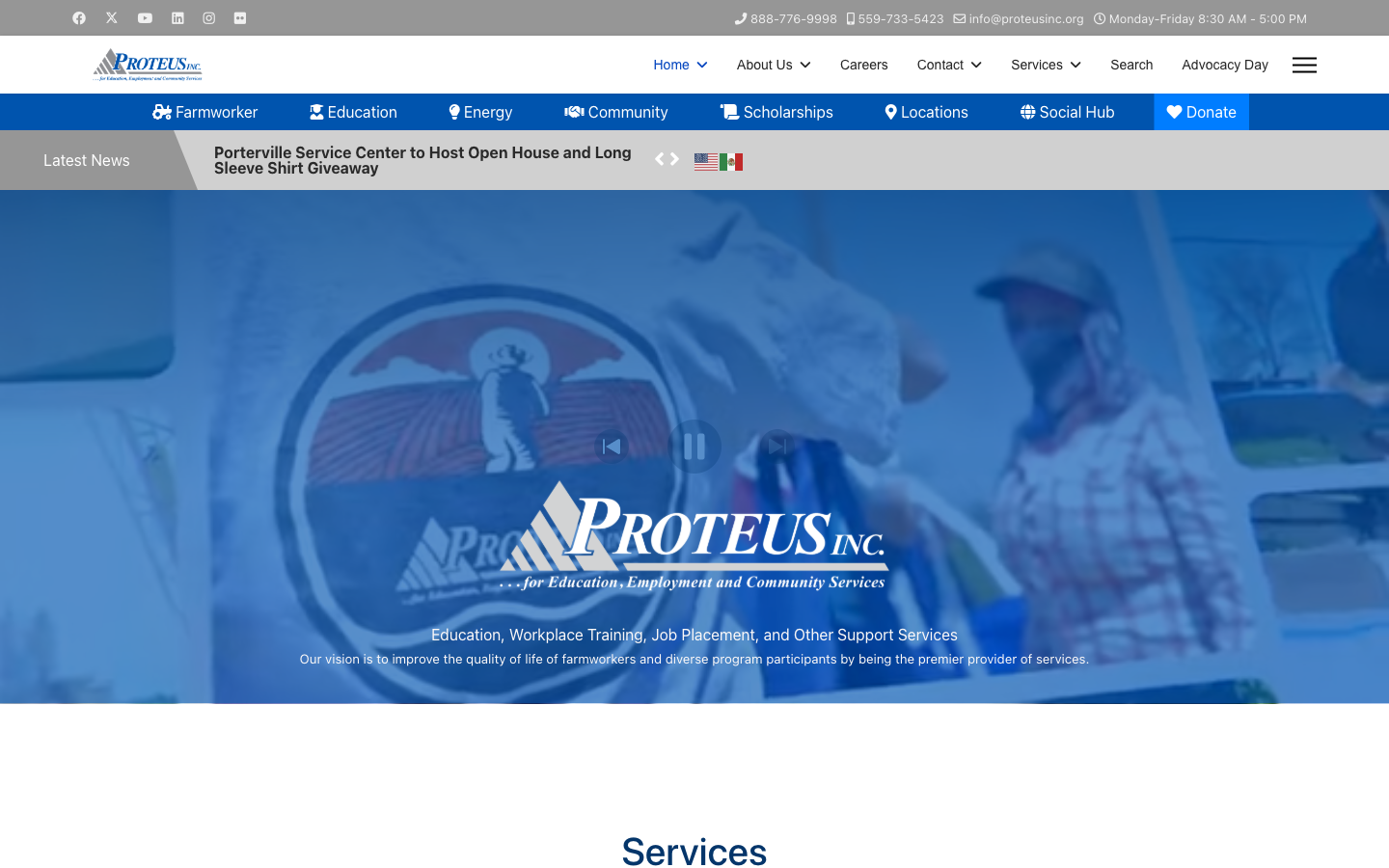
Language switch among farmworker operators.
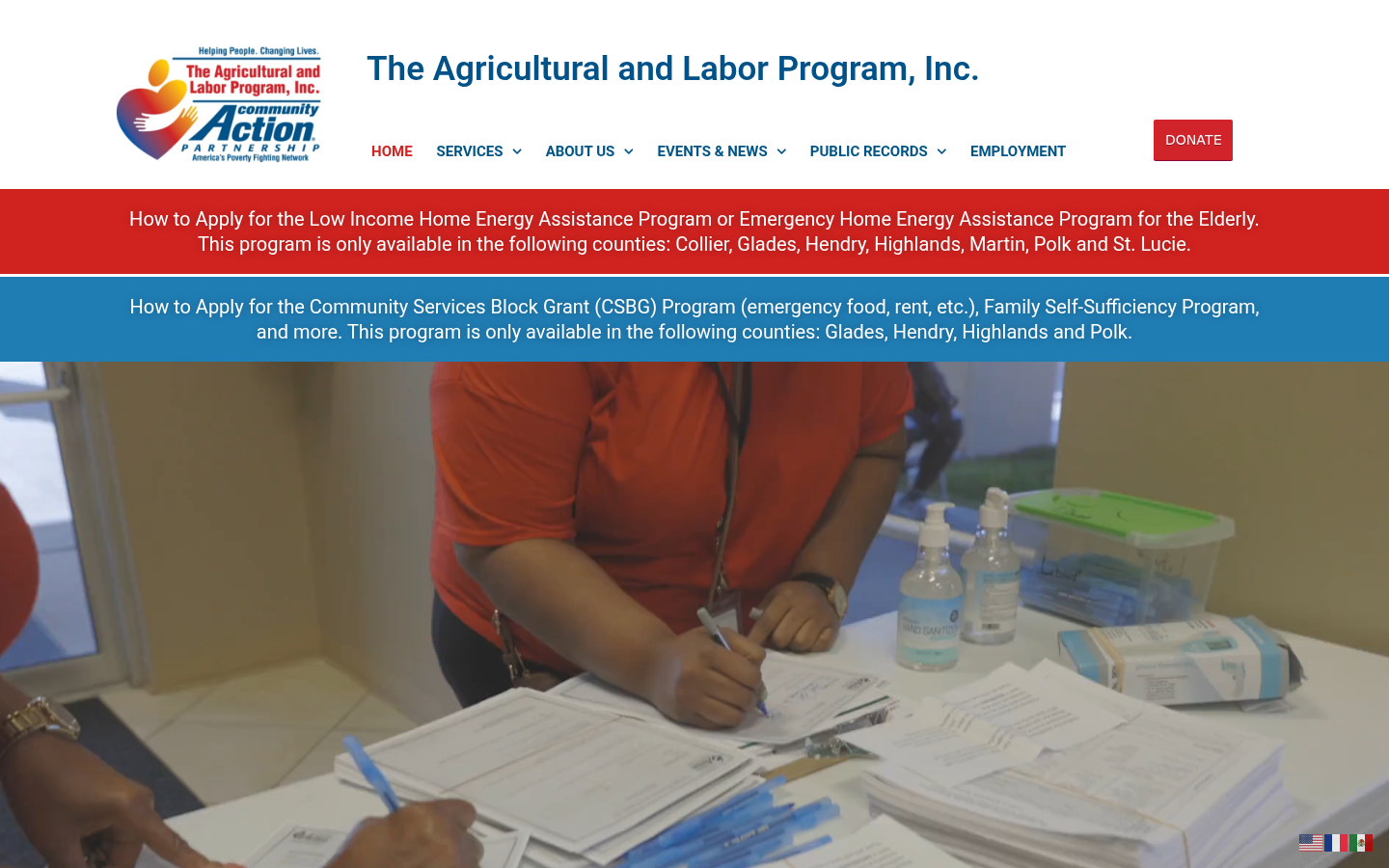
Language control at the far end of the 114.
6 shown
Thirty-six of the 114 name Donate or Give on the homepage. The finished ones pin it in the utility bar so it never competes with Find housing.
Steal. Give in the bar. One repeat after proof. Never as the only public door.
Refuse. Do not float a bouncing donate tab over the photograph.
Donate now pill, twice on the first screen.
DONATE yellow capsule.
DONATE chip on the maroon strip; Give today in the nav.
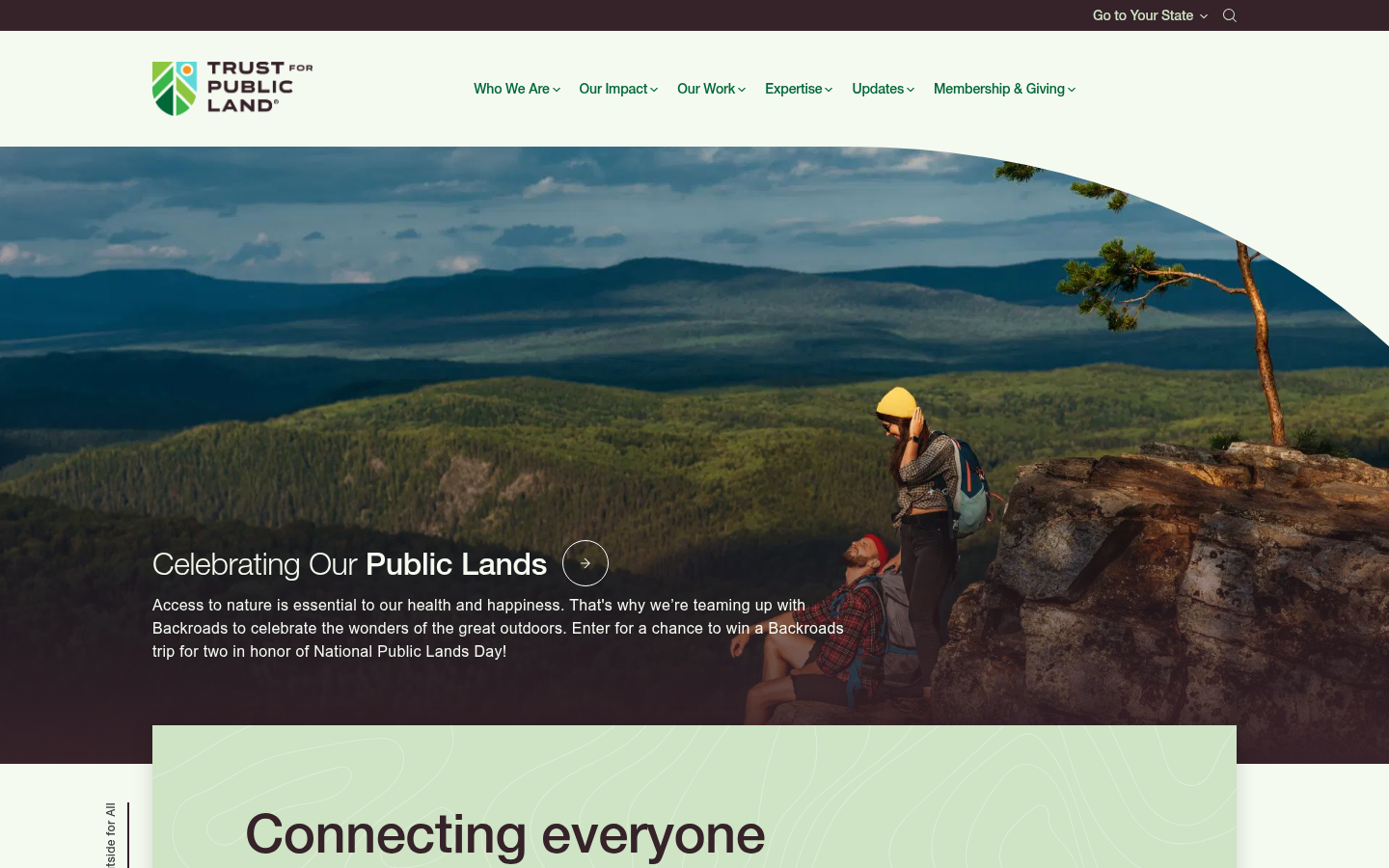
Membership and Giving in the primary nav.

Donate in the menu.
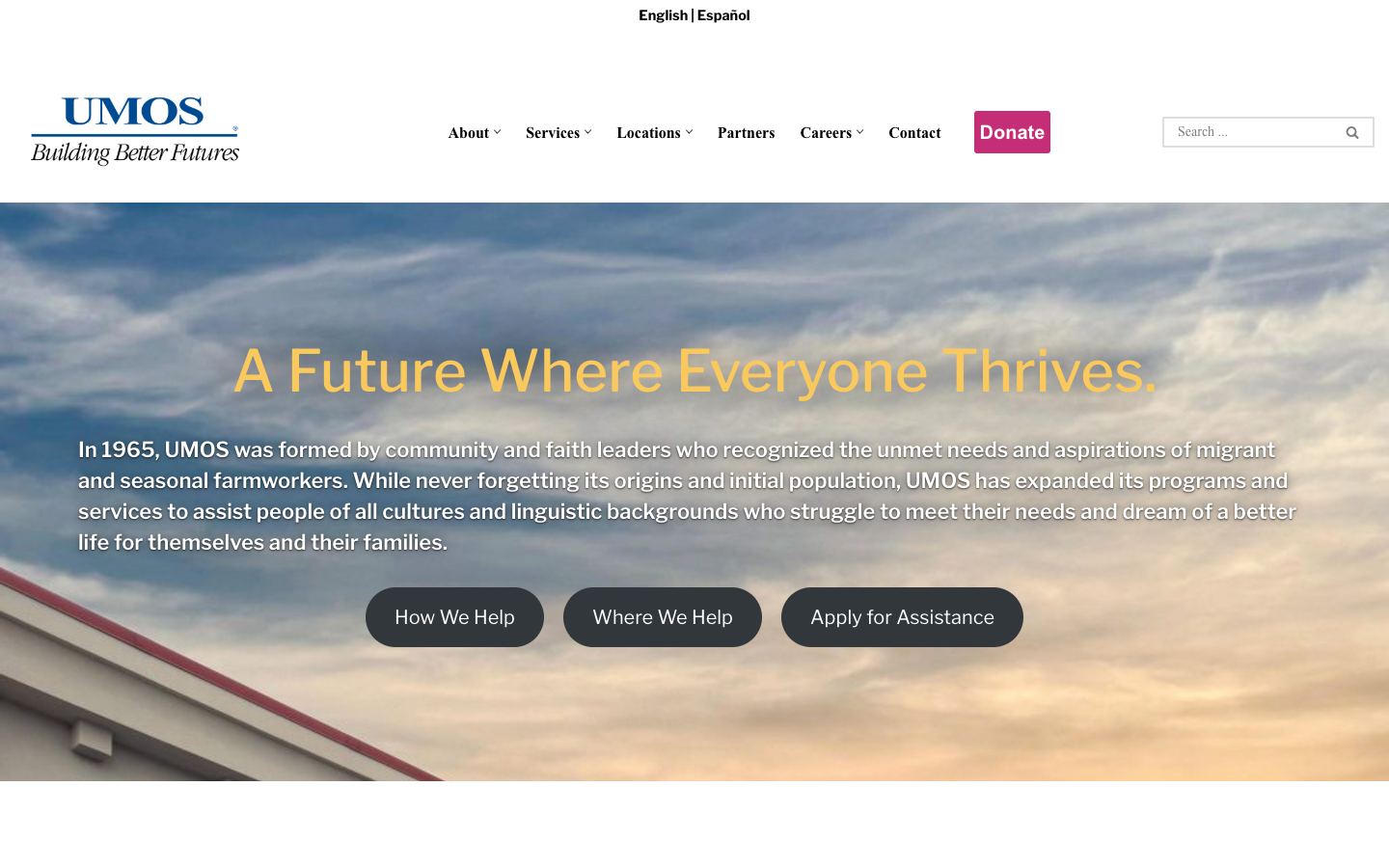
Donate among mid-queue operators.
4 shown
Cookie and privacy overlays appear on fourteen of the 114. They steal the first read when they cover the hero. RCAC is the type case: community stories sit under a consent bar.
Steal. If a banner is required, keep it one line and below the hero claim.
Refuse. Do not let consent cover the only public action.

We value your privacy over the community-stories rail.
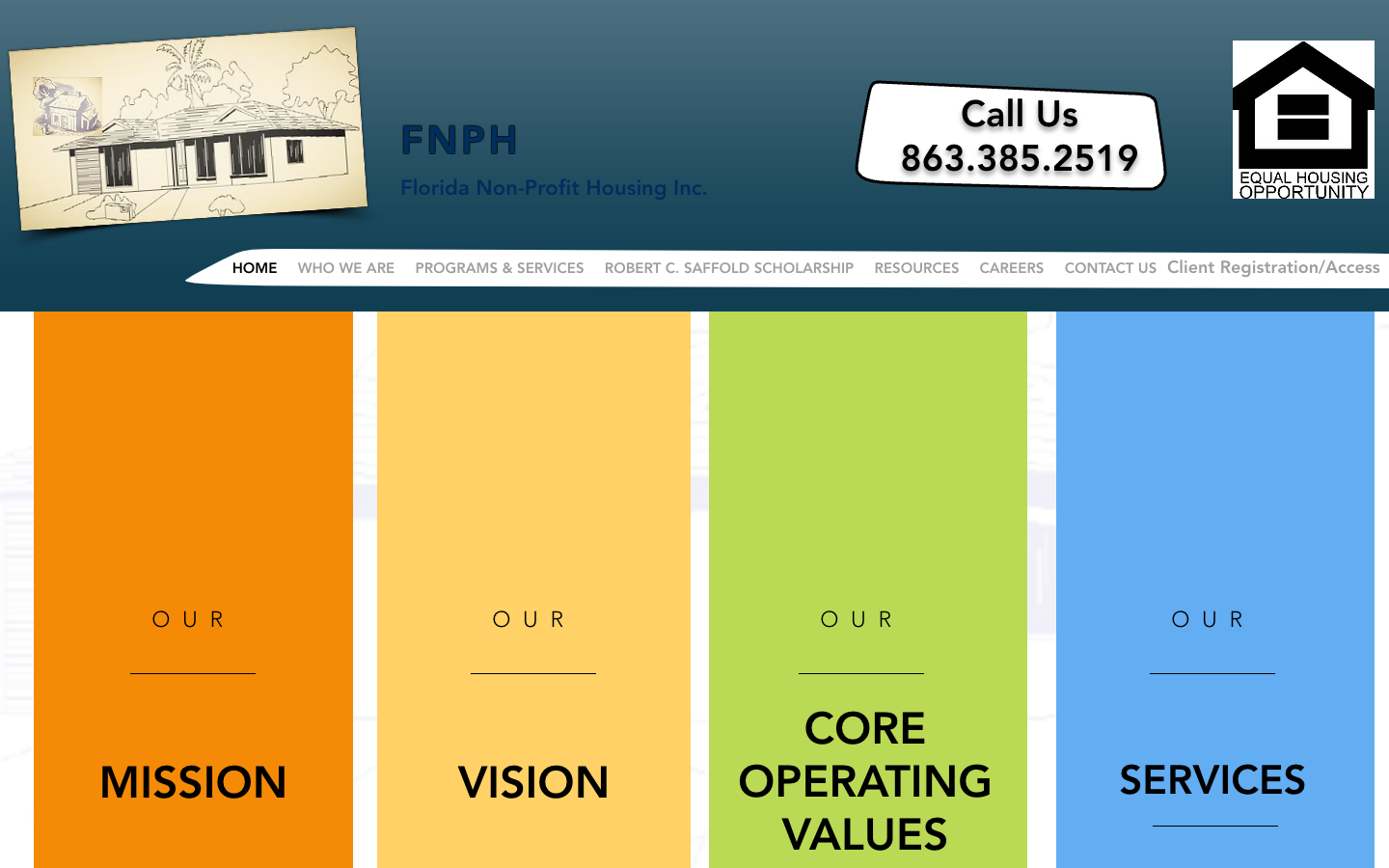
The origin site carries the same overlay pattern.
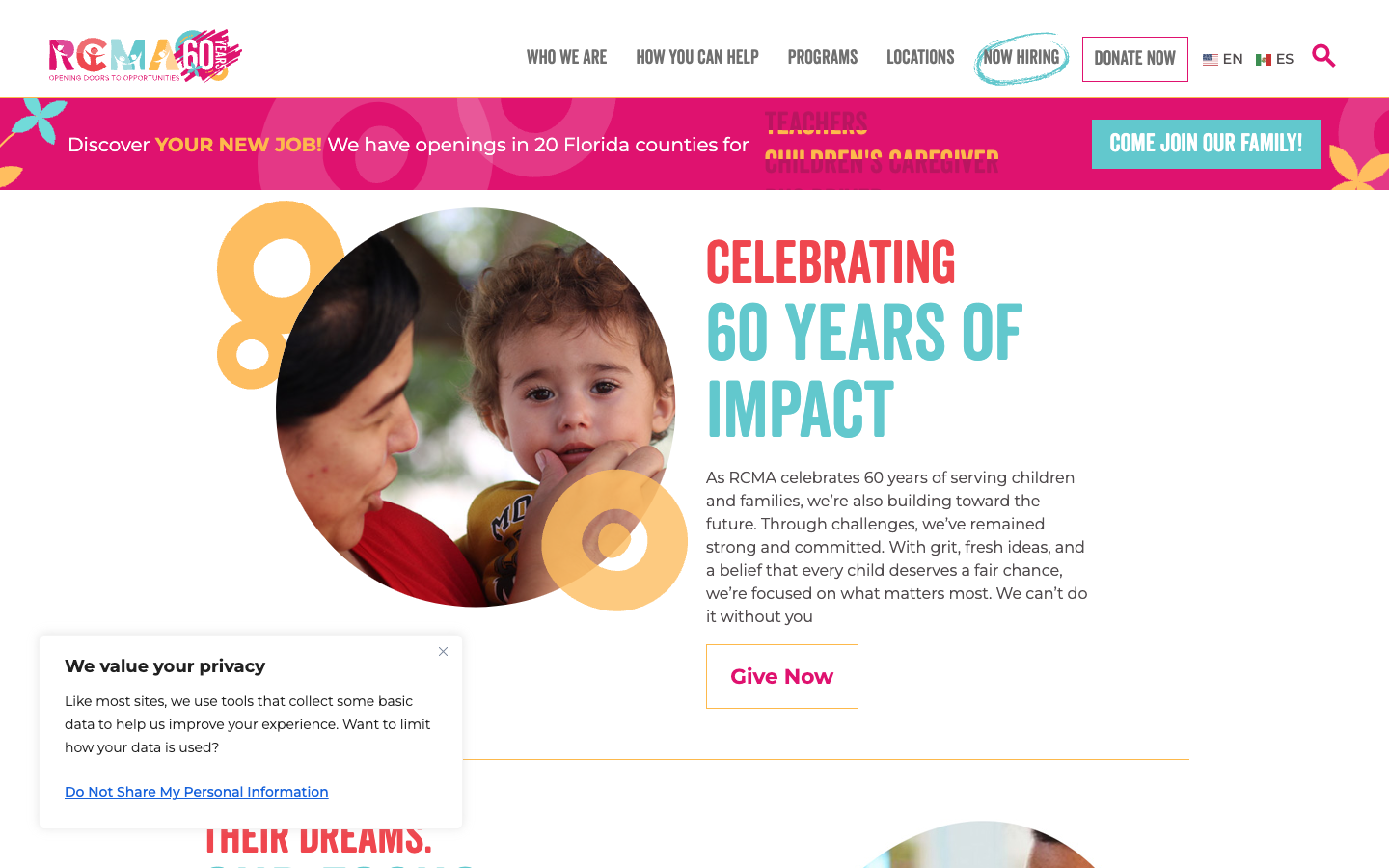
Cookie bar on a Florida farmworker operator.
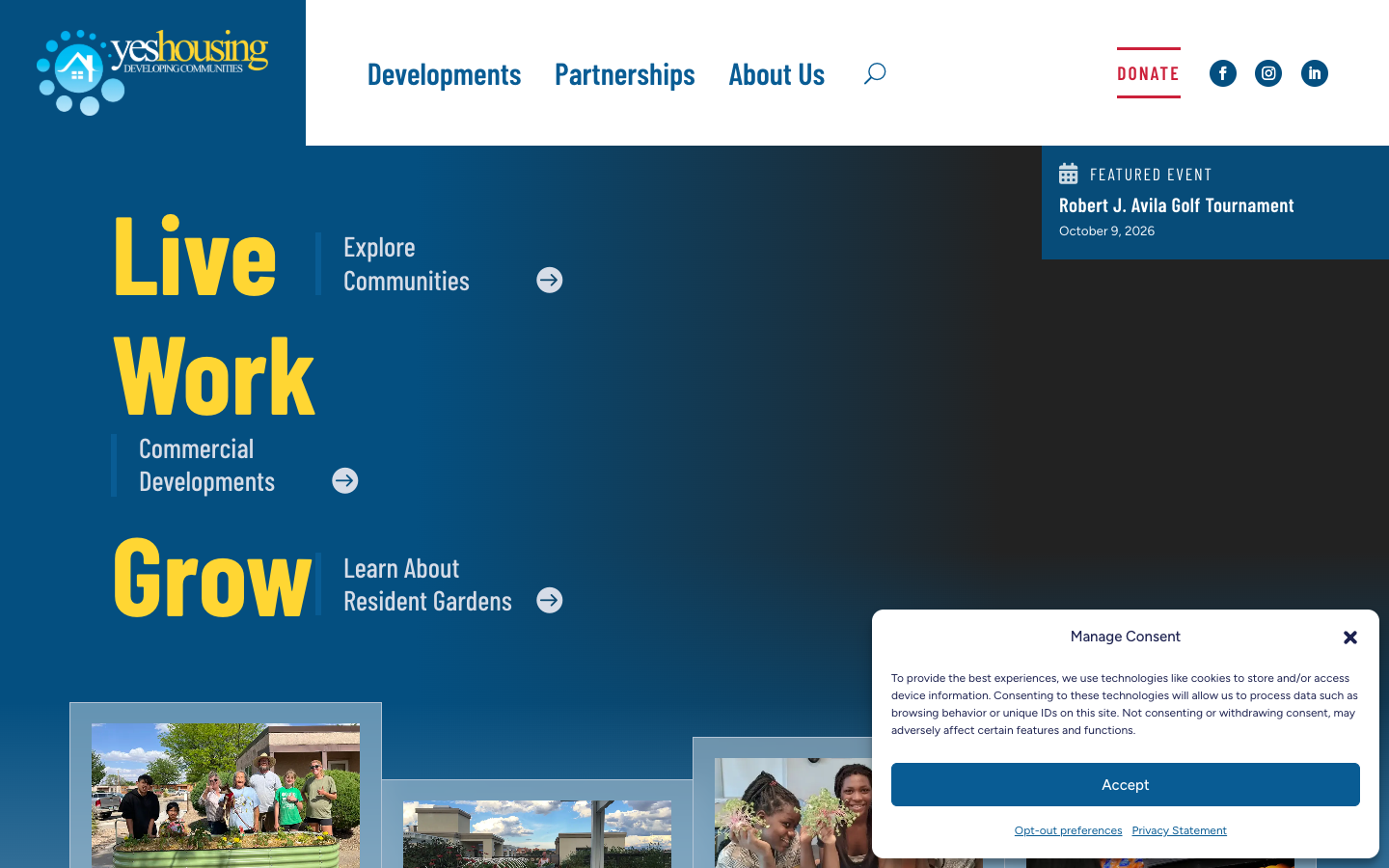
Consent overlay among navy-close palettes.
4 shown
Eight of the 114 put a map on the homepage or a location finder. This is attention for place, not for motion.
Steal. A state or county chooser is enough. FNPH is Florida-first.
Refuse. Do not embed a full Google map as the hero.
Go to your state as a place finder in the chrome.
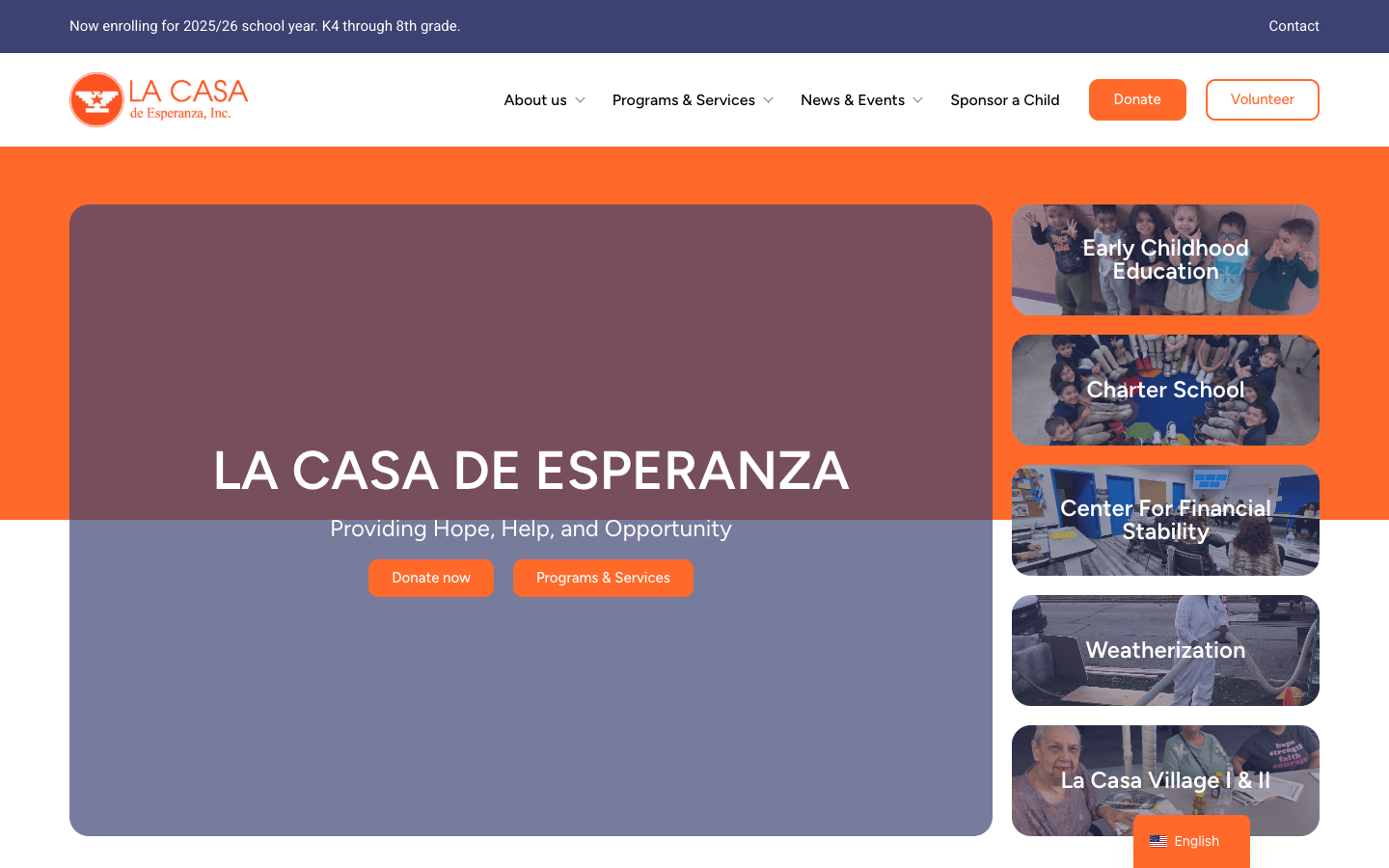
Map among Wisconsin operators.
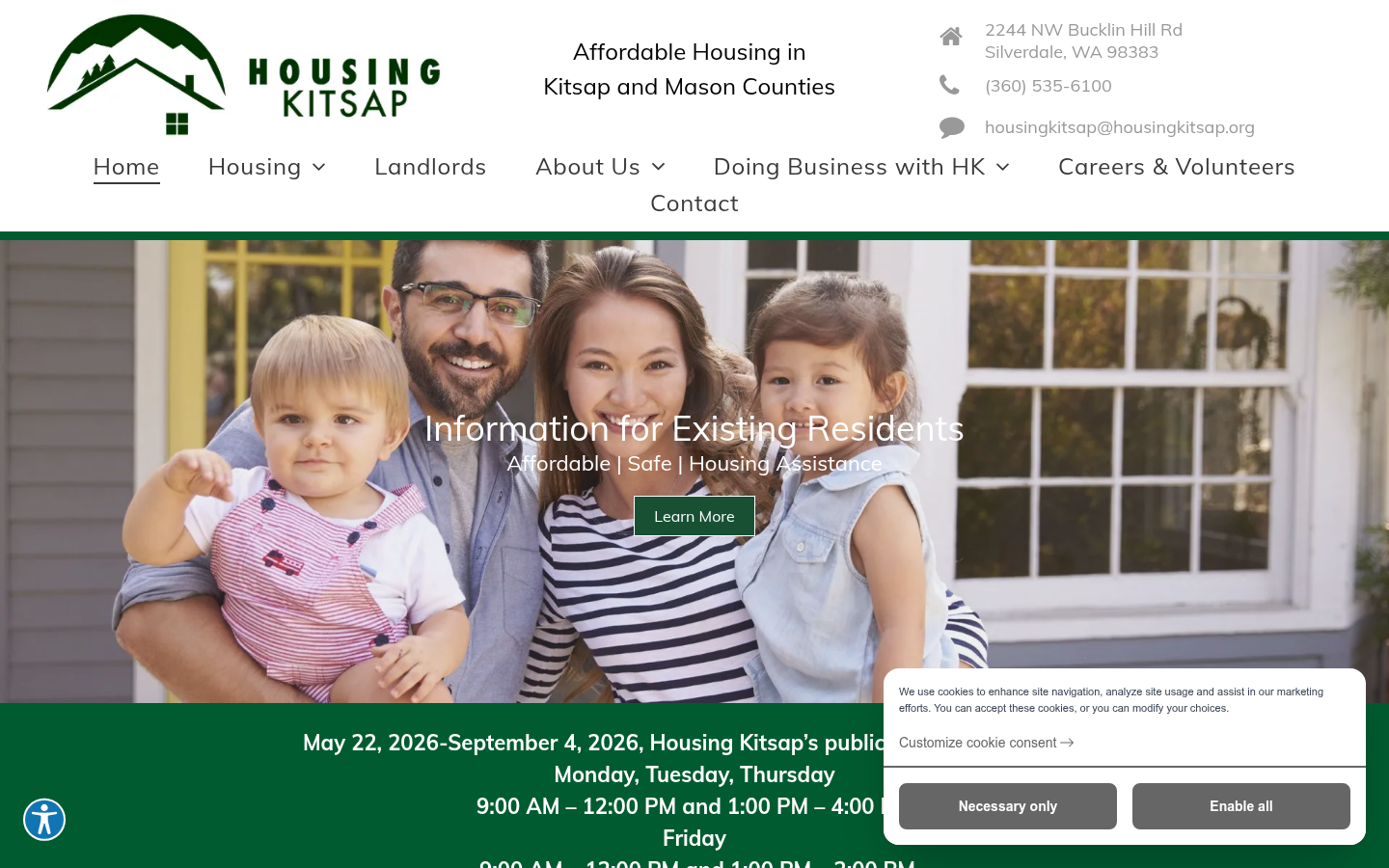
Map among later housing authorities.
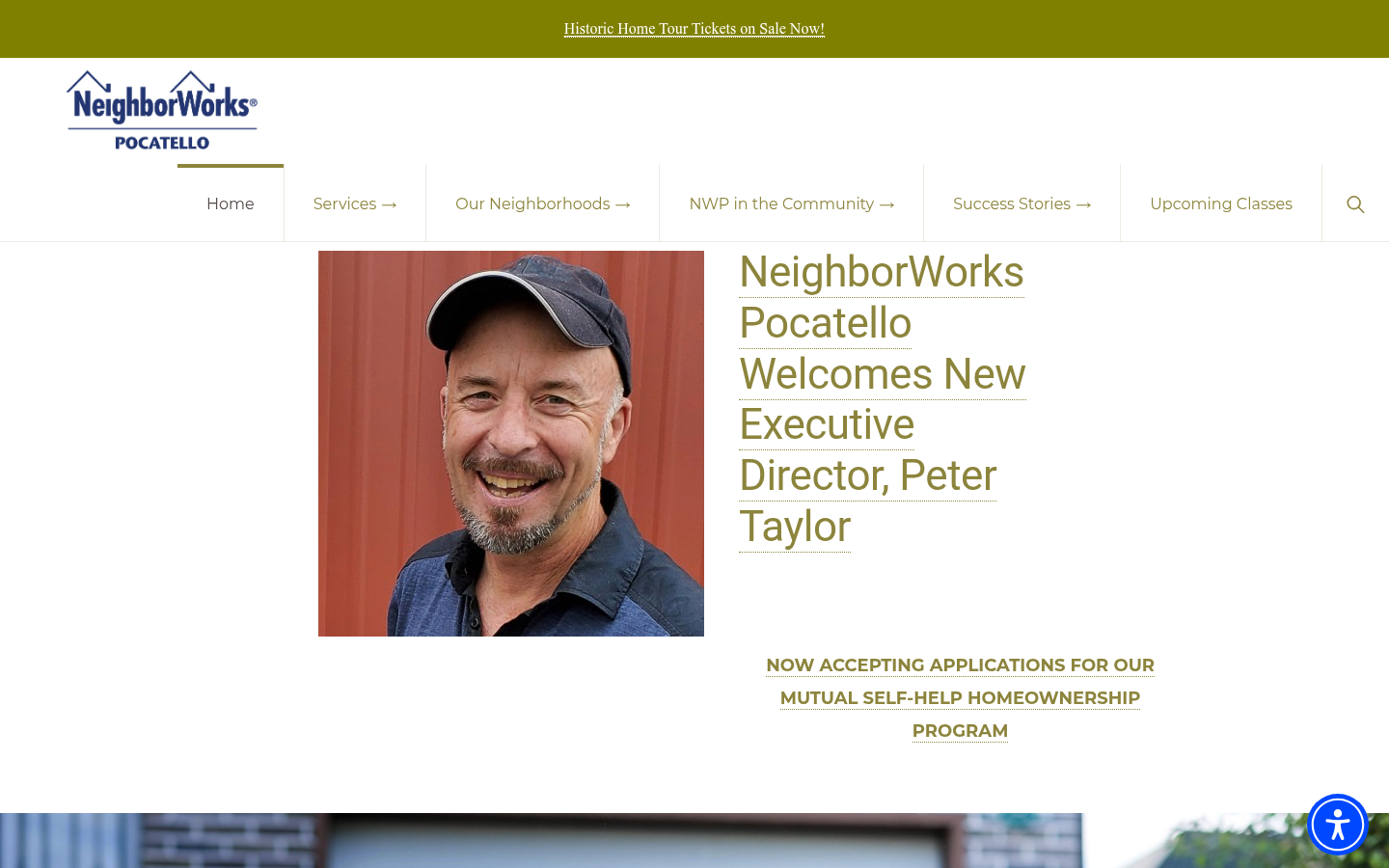
Map on a NeighborWorks affiliate.
4 shown
Eight of the 114 expose FAQ or accordion UI. People's Self-Help Housing is the finished type: apply, search, and FAQs as sibling doors.
Steal. FAQ as a door after apply, not as the homepage structure.
Refuse. Do not build the public home as a stack of collapsed questions.
FAQs beside How to Apply and Search for Housing.
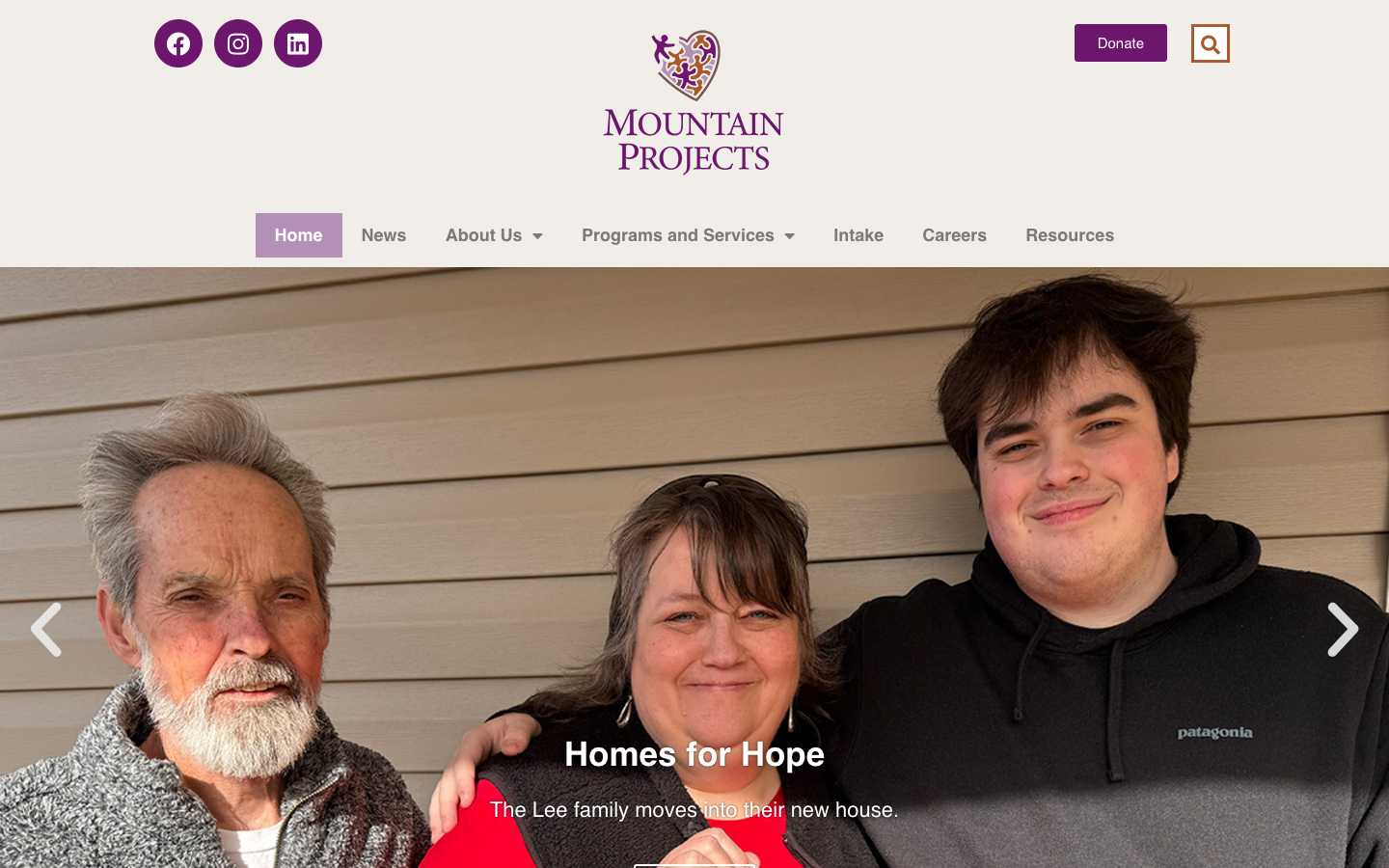
Accordion / apply language in Appalachia.
FAQ pattern on a South Texas operator.
Accordion among 523 self-help operators.